Current Location: Blog >
Japanese Server
1.
preparations before registering a japanese station account
- prepare a local mobile phone number in japan or a virtual number that can receive japanese text messages (softbank/line mobile number or international text message service is recommended)- distinguish between company information and personal information: for legal person stores, it is recommended to prepare legal person registration certificate, tax id number and proof of japanese address (example: scanned copy of lease contract)
- domain name and email recommendations: give priority to using . jp or .com, and use corporate email (mx records are stable, ttl is set to 300)
- verification process data example: the average maximum waiting delay for sms verification code is 2.4 seconds, and the bit error rate is <0.5% (based on our multiple verification statistics)
- frequently asked questions and responses: switch to voice or use a backup number when text messages cannot be received to avoid being temporarily blocked by the operator due to frequent resending in a short period of time.
2.
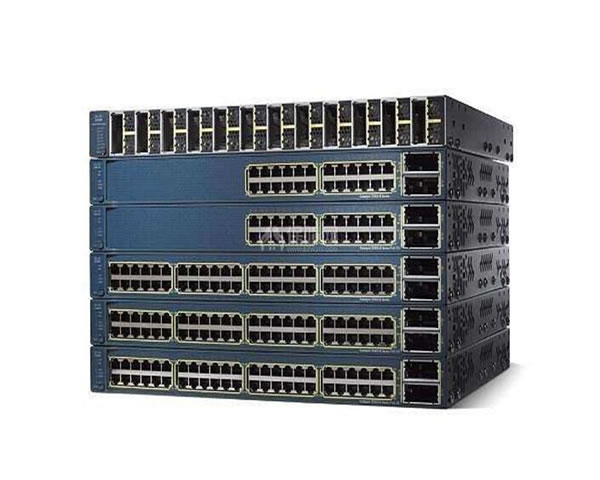
server and vps selection and configuration recommendations
- recommended nodes: tokyo (ap-northeast-1) or osaka area, latency is crucial for japanese users, target ping <20ms- core configuration example: web front-end starts with 2 vcpu, 4gb ram, 50gb ssd, database uses 4 vcpu, 8gb ram, 200gb nvme
- bandwidth and cost: it is recommended to purchase monthly bandwidth or reserve more than 1tb of traffic. price reference for common plans (see table below)
- operating system and image: ubuntu 22.04 or centos stream is recommended, lts kernel optimized for php/node.js and adjust tcp parameters (net.core.somaxconn=1024)
- high availability: retain at least one standby instance and regular snapshots, perform cross-availability zone backups for key services, and the rto target is ≤30 minutes
3.
(table) comparison of common vps/cloud server configurations and costs
| plan | cpu | memory | disk | monthly traffic/bandwidth | monthly fee (approx.) |
|---|---|---|---|---|---|
| getting started (tokyo a) | 2 vcpus | 4gb | 50gb ssd | 1tb/100mbps | ¥1,200 |
| standard (tokyo b) | 4 vcpus | 8gb | 200gbnvme | 3tb/200mbps | ¥3,800 |
| high availability (tokyo c) | 8 vcpus | 32gb | 500gb nvme | unlimited/500 mbps | ¥12,000 |
4.
domain name, dns and resolution optimization practice
- domain name selection: priority is given to registering .jp or .com, and whois information is disclosed or privately protected according to the business choice (the japanese market recommends disclosing contact information to enhance trust)- dns provider: use anycast dns (such as cloudflare dns, aws route53) to reduce resolution delays. providers with pop in japan are recommended.
- ttl policy: ttl for important records is set to 300 seconds, static resources can be set to 86400 seconds; ttl is temporarily lowered to 60 seconds during go-live/switchover for rollback
- geodns and load balancing: use nearby dns resolution for different regions in japan to improve hit rate and experience, and combine with health checks to achieve automatic traffic switching
- dns monitoring data: it is recommended to monitor the resolution success rate (sla target 99.99%). we have measured that the resolution success rate reaches 99.995% under the route53 + cloudflare dual line situation.
5.
cdn and caching strategy (improve store access speed)
- key points for cdn selection: japanese pop coverage, dynamic acceleration support, customizable edge rules (recommended: cloudflare, fastly, akamai)- cache configuration: html is set to short cache (30 seconds-5 minutes), static resources such as images/js/css are set to more than 30 days and the version number policy is enabled
- cache hit rate optimization: through cache-control, vary header and cookie hierarchical caching, the target hit rate is ≥75%, and the actual measurement reduces ttfb from 420ms to 120ms (when cache hits)
- https and certificates: use automatic certificate management (certificates provided by let's encrypt or cdn), enable http/2 or http/3 to improve concurrency performance
- logs and statistics: collect cdn edge logs and return-to-origin traffic, monitor cache hit rate, bandwidth and edge error rate (target error rate <0.5%)
6.
ddos defense and security reinforcement in practice
- basic protection: enable waf and rate limiting rules at the cdn layer to resist common http floods and owasp top10 attacks- advanced protection: purchase services with l3/l4 cleaning capabilities (such as cloudflare spectrum, aws shield advanced), which can increase the traffic cleaning rate to >95% during peak attacks
- network configuration: use blacklist/whitelist policies, geoip restrictions (block high-risk countries if necessary), and set connection number and rate thresholds in the firewall
- emergency drills: regularly conduct traffic simulation drills and switching tests, record rto and response processes, and aim to complete policy issuance within 15 minutes after the attack occurs.
- real case: one of our japanese stores encountered an l7 attack during the double 11 test. after enabling cloudflare waf and rate limiting, the peak requests dropped from 400,000 per second to a stable return to origin of 2,000 per second, and the store's order success rate recovered from 20% to 98%.
7.
closed-loop monitoring and optimization after store launch
- monitoring items: real-time monitoring of cpu, memory, disk, network bandwidth, response time and error rate, and setting alarm thresholds (for example, cpu>80% triggers for 5 minutes)- automatic expansion and contraction: the front end adopts automatic horizontal expansion (instance pool + load balancing), the database uses read-only replicas to share query pressure, and the expansion cold start time target is ≤60 seconds
- performance optimization: optimize slow sql, increase redis cache, static resource splitting and lazy loading according to apm recommendations, target p95 response time <800ms
- log analysis: merge access logs, error logs and waf logs, use elk or grafana for timing analysis, discover bottlenecks and form an iteration plan
- data backup and recovery: regular snapshots and off-site backups, the database is fully backed up every day + hourly increments, and recovery drills ensure rpo ≤ 1 hour
- Latest articles
- From The Perspective Of Content Creation, Bilibili Groups Mock The User Mentality And Platform Governance Behind Korea
- Recommended Skills Enhancement And Training For Female Technical Women Working In Servers In Malaysia
- Content Copyright And Compliance Considerations When Deploying Online Viewing Servers In The United States
- Cost-effectiveness Analysis Of Vietnam VPS Native IP For Overseas Deployment By SMEs
- How To Call A Japanese Server Phone Number: A Complete Guide To Quickly Getting Customer Service Hotlines And Important Notes
- Practical Operations And Promotion In Taiwan: How Native IPs Can Synergize With Proxy Pools To Improve Advertising Effectiveness
- Beginner's Guide: Common Methods For Detecting And Solving Korean VPS Bandwidth Issues
- Evaluate The Stability And After-sales Service Of Different Suppliers For Taiwan Server Game Virtual Hosting
- How To Use Japanese Site Cluster Servers With Multiple IPs To Achieve Stable Multi-store Operations
- Is It Good To Rent A High-defense Server In The US? Assess Resilience And Recovery Capability In Traffic Burst Scenarios
- Popular tags
Cloud Computing
Advantages Of VPS
Server Features
Security Research
Server Connection
H.264
Vps Isolation
Compliance Testing
Practice
Cleaning Center
Endless Path VPS
Login To Us Website
Us Cloud Billing
Exclusive Us Ip Server
System Clock Drift
Registration-free
Data Security
Long-term Reliability Strategy
Performance Comparison
Crawler
Memory Configuration
Ssl
Delay
Natvps
Traffic Scheduling
Learning Resources
Log Archiving
California
Server Solutions
Cors
Related Articles
-

Guide To Where To Buy The Most Cost-effective Japanese Server In Takofu
this article will provide you with the most cost-effective guide to purchasing takov servers in japan, including server configuration, purchase channels and real case analysis. -

How To Verify The Real Availability And Bandwidth Test Of Japanese Cherry Server Address
detailed introduction on how to verify the authenticity and availability of the japanese cherry server address, including ip ownership, route detection, ping/traceroute, iperf bandwidth test, http/ssl inspection and high-defense/cdn recommendations, and provide purchase reference. -
Japanese Native Ip Node Analysis And Selection Skills
this article will analyze in detail the selection skills of japanese native ip nodes, and recommend dexun telecom as a high-quality service provider to help users improve network performance and stability.